
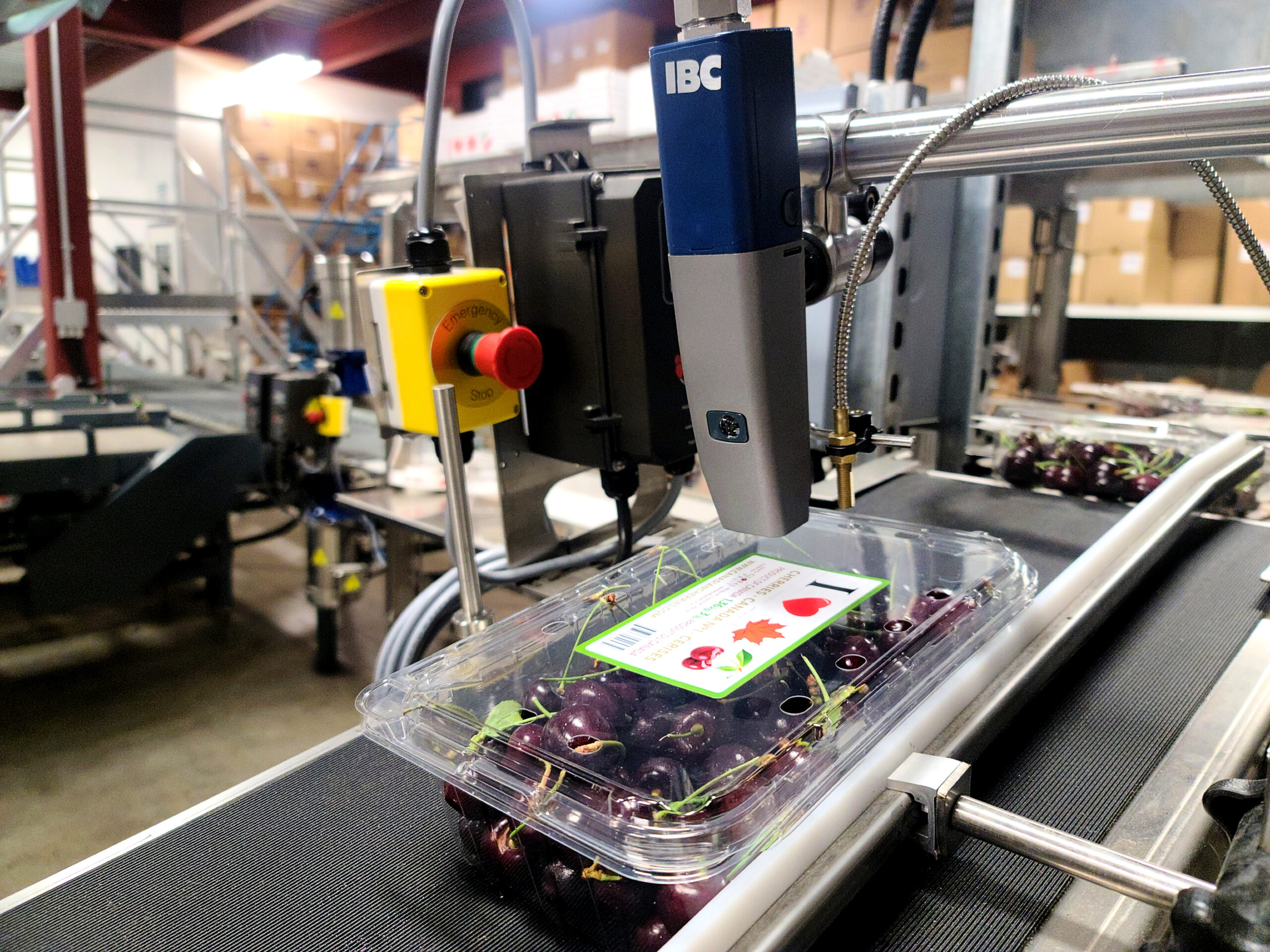
New Case Study: Modernizing Clamshell Traceability with Automated Inkjet Solutions
IBC International Bar Coding has released a new case study highlighting how a Northwest cherry packing facility successfully upgraded its clamshell traceability process using automated inkjet printing technology.
Facing increasing retailer requirements and the limitations of manual labeling, the facility partnered with IBC to implement automated inkjet coding systems across two production lines. The goal was to improve product traceability, streamline production, and reduce labor-intensive processes while maintaining reliable code quality on high-speed packaging lines.
The new system enabled clear, consistent coding directly onto clamshell packaging, helping the operation enhance supply chain visibility and support food safety compliance requirements. By replacing manual labeling workflows with automated printing technology, the facility achieved improved production efficiency, reduced manual handling, and more dependable traceability performance.
IBC’s clamshell traceability inkjet solutions are designed specifically for produce packaging environments where speed, readability, and uptime are essential. These systems can be scaled from semi-automated setups to fully integrated inline solutions, making them ideal for fruit and vegetable packers looking to modernize their operations while preparing for evolving compliance and retailer demands.
As traceability requirements continue to increase across the food industry, automated coding solutions are becoming an essential investment for operations seeking greater efficiency and improved product tracking throughout the supply chain.