
Understanding Radio Frequency Identification (RFID)
Radio Frequency Identification (RFID) is a technology that uses radio waves to automatically identify, locate, and track objects without requiring direct line-of-sight scanning. Unlike traditional barcodes, which must be individually scanned, RFID tags can be read automatically from a distance—even when multiple items are moving through a doorway, conveyor system, or warehouse.
An RFID system consists of three primary components: an RFID tag attached to an object, an RFID reader, and one or more antennas that transmit and receive radio signals. When an RFID tag enters the reader’s field, the tag communicates its unique identification information, allowing software to instantly record the item’s location, status, or movement.
Today, RFID is used across manufacturing, warehousing, healthcare, retail, logistics, forestry, food production, government, and countless other industries to improve visibility, automate data collection, and eliminate manual scanning.
How RFID Works
At its simplest, an RFID system follows four steps:
- An RFID tag is attached to a product, pallet, asset, container, or piece of equipment.
- An RFID reader creates a radio frequency field through one or more antennas.
- When the tagged item enters the field, the tag transmits its unique identifier (and other stored information, if applicable).
- Software receives the data and updates inventory, production, warehouse, or enterprise systems in real time.
Unlike barcode technology, RFID does not require each label to be visible to the scanner, making it ideal for automated environments.
Components of an RFID System
RFID Tags
RFID tags contain a small microchip and antenna. Depending on the application, they may be:
- RFID labels
- RFID Durable industrial tags
- RFID Asset tags
- RFID Pallet labels
- RFID Wristbands
- RFID Plastic cards
- RFID Metal mount tags
- RFID Cable ties
- RFID Hang tags
Tags can be disposable or designed to last for years in harsh industrial environments.
RFID Readers
Readers communicate with RFID tags and collect their information. They are available as:
- Fixed industrial readers
- Portal readers
- Conveyor readers
- Vehicle-mounted readers
- Desktop readers
- Handheld mobile readers
RFID Antennas
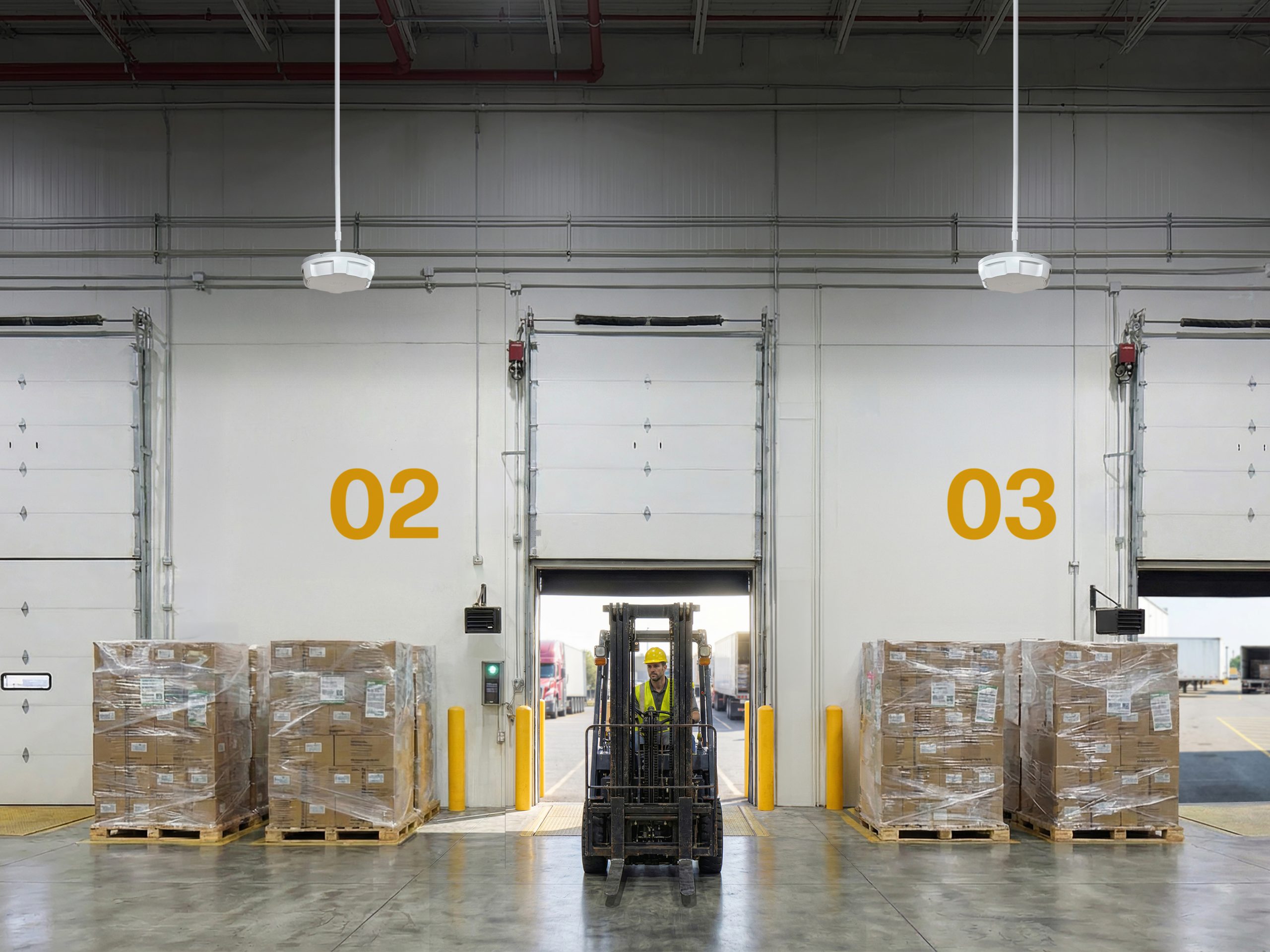
Antennas determine the read zone and coverage area. Multiple antennas can be combined to monitor:
- Dock doors
- Conveyor systems
- Warehouse aisles
- Production lines
- Forklift lanes
- Storage yards
RFID Software
Software connects RFID hardware to existing business systems, including:
- ERP
- WMS
- MES
- SCADA
- Inventory systems
- Traceability databases
Types of RFID
Passive RFID
The most common RFID technology.
Passive tags contain no battery and receive power from the RFID reader. They are economical, lightweight, and ideal for high-volume applications.
Typical uses:
- Inventory
- Retail
- Manufacturing
- Logistics
- Supply Chain
- Healthcare
Active RFID
Active tags contain an internal battery that continuously broadcasts their location over much longer distances.
Typical uses:
- Vehicle tracking
- Mining
- Large equipment
- Shipping containers
- Personnel tracking
Semi-Passive RFID
These tags combine battery assistance with passive communication, providing greater read performance while conserving battery life.
RFID vs Barcode
| Feature | Barcode | RFID |
|---|---|---|
| Line of sight required | Yes | No |
| Multiple items at once | No | Yes |
| Read through packaging | No | Yes |
| Automation friendly | Moderate | Excellent |
| Read speed | One item at a time | Hundreds of tags simultaneously |
| Data rewriting | Limited | Available on many tags |
| Typical read distance | Inches to feet | Inches to 30+ feet (application dependent) |
Both technologies have their place, and many organizations use barcodes and RFID together to create comprehensive traceability systems.
Common RFID Applications
Manufacturing
Track raw materials, work-in-progress, finished goods, and returnable assets while reducing manual scanning and improving production visibility.
Warehousing & Distribution
Automate receiving, inventory counts, pallet verification, and shipping confirmation with RFID portals and handheld readers.
Healthcare
Improve patient safety by tracking equipment, medications, specimens, and patient wristbands throughout healthcare facilities.
Retail
Increase inventory accuracy, improve loss prevention, accelerate cycle counts, and support omnichannel fulfillment.
Forestry & Wood Products
Track logs, lumber packs, engineered wood products, pallets, and finished materials throughout the production process.
Food & Beverage
Monitor products from production through distribution while supporting food safety, inventory management, and regulatory compliance.
Government & Public Sector
Manage high-value assets, fleet equipment, evidence, records, and inventory across multiple facilities.
Why Choose RFID?
Organizations invest in RFID because it helps eliminate manual processes while providing real-time visibility into operations.
Improved Accuracy
Reduce manual data entry and human error through automated identification.
Faster Inventory Counts
Count hundreds or thousands of tagged items in minutes rather than hours.
Real-Time Visibility
Know exactly where inventory, assets, and products are throughout your facility.
Enhanced Traceability
Automatically capture movement history to support recalls, quality control, and regulatory compliance.
Increased Productivity
Reduce labor associated with scanning, searching, and manual record keeping.
Better Customer Service
Accurate inventory leads to improved order fulfillment and fewer shipping errors.
Technical Perspective
Most industrial RFID systems today operate using Ultra High Frequency (UHF) technology because it offers the read distance and speed required for manufacturing, warehousing, and logistics applications.
Typical UHF systems can:
- Read hundreds of tags per second
- Operate over several metres depending on tag and antenna selection
- Integrate with conveyors, forklifts, dock doors, and automated production equipment
- Support EPCglobal Gen2 / ISO 18000-63 standards for global interoperability
The performance of an RFID system depends on several factors, including tag type, antenna placement, environmental conditions, and the materials being tagged. For example, metal and liquids can affect radio frequency performance, but specialized tags and system designs are available to address these challenges.
RFID + Automation
RFID becomes even more powerful when integrated with automation technologies such as:
- Print & Apply Labeling
- Vision Inspection Systems
- Fixed Mount Barcode Scanners
- Conveyor Systems
- Industrial Printers
- Mobile Computers
- Warehouse Management Systems (WMS)
- Manufacturing Execution Systems (MES)
- Enterprise Resource Planning (ERP)
Together, these technologies create a complete Automatic Identification and Data Capture (AIDC) solution that improves productivity, reduces errors, and provides actionable business intelligence.
Why Choose IBC for RFID Solutions?
For over 30 years, IBC has helped organizations implement barcode, RFID, labeling, automation, and traceability systems across manufacturing, healthcare, forestry, food production, logistics, retail, and government.
Rather than simply supplying hardware, IBC designs complete RFID solutions tailored to your operational goals. From site assessments and proof-of-concept testing to system integration, software, installation, and ongoing support, our team works with you to ensure your RFID investment delivers measurable results.
Whether you’re tracking pallets, tools, returnable containers, healthcare assets, or finished products, IBC can help you build a scalable RFID solution that grows with your business.