
10 Steps to Help Prevent Food Product Recalls: A Practical Guide to Food Safety and Traceability


A food product recall can cost a business far more than the value of the affected products. Production disruptions, product disposal, transportation costs, customer notifications, lost sales, and reputational damage can have lasting consequences.
For food manufacturers, processors, packers, and distributors, preventing recalls begins long before a problem reaches the consumer.
It requires effective food safety procedures, accurate production records, reliable ingredient tracking, appropriate quality controls, and the ability to trace products throughout the supply chain.
Technology also plays an important role. Barcode labeling, mobile computers, automated data capture, and integrated traceability systems can help businesses record product movements, maintain accurate lot information, and identify potentially affected products more efficiently.
While no system can eliminate every food safety risk, a well-designed approach can help businesses reduce preventable errors and strengthen their ability to respond when problems arise.
IBC International Bar Coding Systems & Consulting helps food businesses improve product identification, traceability, and data collection through barcode, RFID, labeling, and automation solutions.
Here are ten practical steps to help strengthen your food safety and recall-prevention strategy.
Step 1: Establish Strong Food Safety Procedures
The foundation of food recall prevention is a comprehensive food safety program.
Technology can help capture information and monitor processes, but it cannot replace effective sanitation, employee training, supplier controls, hazard analysis, and production procedures.
Food businesses should establish documented processes appropriate to their products, facilities, and regulatory obligations.
Depending on the operation, these may include:
- Hazard analysis and preventive controls.
- Sanitation and cleaning procedures.
- Temperature control and monitoring.
- Allergen management.
- Foreign material prevention.
- Employee hygiene and training.
- Equipment maintenance.
- Supplier approval and ingredient inspection.
- Procedures for handling non-conforming products.
Employees should understand their responsibilities and know how to report potential food safety concerns.
Procedures should also be reviewed regularly to ensure they remain appropriate as products, equipment, and production methods change.
Why it matters: Strong preventive controls reduce the likelihood of contamination, undeclared allergens, and other food safety problems that can lead to recalls.
IBC connection: Barcode and data collection technologies can support food safety procedures by improving the accuracy of production records and product identification. They work alongside—not in place of—food safety controls.
Step 2: Maintain Accurate Ingredient and Supplier Records
Food safety risks can originate before ingredients reach your facility.
A contaminated raw material, an undeclared allergen, or an ingredient that fails to meet specifications can affect multiple finished products.
For this reason, businesses need reliable records identifying where ingredients came from and which production batches used them.
Important information may include:
- Supplier identification.
- Ingredient name and product code.
- Supplier lot or batch number.
- Receiving date.
- Quantity received.
- Expiry or best-before information, where applicable.
- Inspection or acceptance status.
- Storage location.
- Production batches in which the ingredient was used.
When possible, ingredient information should be captured directly from source documents or scanned labels rather than repeatedly entered by hand.
Manual data entry can introduce mistakes, particularly when employees handle multiple ingredients with similar descriptions or lot numbers.
Barcode scanning and integrated receiving systems can help employees capture identifiers consistently and associate incoming materials with the correct records.
Why it matters: If a supplier notifies you of a contaminated ingredient, accurate receiving and production records can help you determine which finished products may be affected.
Step 3: Implement Reliable Lot and Batch Tracking
Every food manufacturer should have a clearly defined approach to identifying production lots or batches.
A lot identifier connects a finished product with the records needed to understand how, when, and where it was produced.
Depending on the business, these records may include ingredients used, production dates, processing lines, packaging runs, quality checks, and finished-product quantities.
The system must also maintain the relationship between the ingredients entering production and the products leaving it.
For example, if one ingredient lot is used in three different production batches, the records should allow the business to identify all three batches.
Likewise, if one production batch is packaged under several product codes or distributed to multiple customers, those relationships should be recorded.
Barcode labels can help make lot identification consistent across ingredients, work in progress, cases, and pallets.
When employees scan a barcode, the associated system can retrieve the relevant lot or product record, provided the data has been correctly established and maintained.
Why it matters: Reliable lot tracking helps businesses narrow the scope of an investigation instead of automatically treating every product manufactured during a broad period as potentially affected.
IBC connection: IBC’s traceability solutions can help businesses connect product identification and data collection throughout their operations.
Step 4: Capture Production Data at the Point of Activity
Food production involves numerous activities that can affect product safety and traceability.
Ingredients are received, moved into storage, issued to production, processed, packaged, and transferred into finished-goods inventory.
If these movements are recorded later from memory or handwritten notes, important information may be incomplete or inaccurate.
Capturing information as activities occur helps create a more dependable production history.
Depending on the application, employees may need to record:
- Ingredient lot numbers used in a batch.
- Production line or equipment identification.
- Processing date and time.
- Product quantity.
- Packaging material and label version.
- Quality inspection results.
- Finished-product lot numbers.
- Transfers between production and storage areas.
Mobile computers and barcode scanners can make this process more practical by allowing employees to scan identifiers and enter information directly into connected systems.
This can reduce repetitive data entry and help standardize how information is recorded across shifts and production areas.
The system should also include appropriate checks to flag missing, invalid, or inconsistent information.
Why it matters: Accurate production records help establish which products are connected to a specific ingredient, processing event, or quality issue.
IBC connection: IBC provides barcode and mobile data collection solutions, including technologies that can help food businesses capture information throughout their operations.
Step 5: Verify Product Labels and Allergen Information
Labeling errors are an important source of food recalls.
A product may be manufactured correctly but still present a serious risk if it carries the wrong label, omits a required allergen declaration, or contains information that does not match the product inside the package.
These problems can occur when production changes between products, packaging materials are mixed up, or outdated label formats remain in circulation.
Businesses should establish controls to ensure the correct packaging and label are used for each product.
Practical measures include:
- Verifying product identity before packaging begins.
- Confirming the correct label version is available at the production line.
- Removing obsolete packaging materials during product changeovers.
- Checking allergen declarations against approved product specifications.
- Verifying variable information such as lot codes and dates.
- Performing appropriate in-process label inspections.
- Documenting and investigating labeling errors.
Barcode scanning can support these checks by comparing the product or packaging identifier against the expected production order.
For example, a system may be configured to alert an operator when a scanned packaging identifier does not match the product scheduled for production.
Such controls must be designed and validated for the specific application; scanning alone does not verify every aspect of a label’s contents or regulatory compliance.
Why it matters: Accurate label control helps reduce the risk of incorrect product identification, missing allergen information, and packaging mix-ups.
IBC connection: IBC’s industrial labeling, barcode scanning, and barcode verification services can support appropriate aspects of label quality and identification control.
Step 6: Monitor Critical Food Safety Controls
Some food safety risks must be controlled through defined process parameters and monitoring procedures.
Depending on the product and process, these may include cooking temperatures, cooling times, refrigeration temperatures, sanitation controls, or other critical or preventive controls identified by the facility’s food safety plan.
Businesses should establish procedures that specify:
- What must be monitored.
- Where and how measurements are taken.
- Required limits or acceptance criteria.
- How often monitoring occurs.
- Who is responsible.
- What happens when a result falls outside the required limits.
- How corrective actions are documented.
Digital data collection may help businesses record measurements consistently, associate records with the correct production batch, and identify missing entries.
Where appropriate, connected instruments or monitoring systems may reduce reliance on manual recording.
However, simply recording a measurement does not ensure a process is safe. Equipment must be suitable for its intended use, measurements must be reliable, and employees must follow validated procedures and take corrective action when necessary.
Why it matters: Consistent monitoring helps identify process deviations before potentially affected products are released.
IBC connection: IBC’s data collection and identification technologies can complement food safety monitoring systems by helping associate operational records with the relevant products, lots, and production activities.
Step 7: Maintain Accurate Finished-Product Inventory Records
Knowing which ingredients went into a product is only part of traceability.
Businesses must also be able to determine what happened to the finished products.
After packaging, products may move to a warehouse, cold storage, a distribution centre, a retailer, or another processing facility.
Accurate inventory records help businesses establish where products are located and whether they remain under their control.
A robust process should record relevant information such as:
- Finished-product identifier.
- Lot or batch number.
- Production date.
- Quantity produced.
- Quantity held in inventory.
- Storage location.
- Shipment quantity.
- Customer or destination.
- Shipment date and associated shipping documentation.
Barcode scanning at receiving, put-away, picking, and shipping can help ensure product movements are recorded consistently.
Where the system supports it, scanning can also help confirm that the product and lot being moved match the intended transaction.
Businesses should establish procedures for inventory adjustments, damaged products, returned goods, and products placed on hold.
Why it matters: If a food safety issue is identified, accurate inventory records help determine which products remain on-site and which have already been distributed.
IBC connection: IBC’s barcode and traceability solutions can help businesses improve product identification and inventory data capture.
Step 8: Establish a Product Hold and Quarantine Process
When a potential food safety problem is identified, businesses need to prevent potentially affected products from being used or shipped until an appropriate assessment has been completed.
A documented hold process helps ensure that products are identified, segregated where necessary, and controlled while the issue is investigated.
The procedure should define:
- Who can place products on hold.
- How affected lots are identified.
- How physical products are segregated or otherwise controlled.
- How inventory systems record the hold status.
- How employees are prevented from accidentally shipping held products.
- Who is authorized to release products.
- How decisions and corrective actions are documented.
Barcode scanning and inventory software can support these controls when configured to recognize product status and prevent unauthorized transactions.
For example, an integrated system may flag a held lot during picking or shipping so that employees cannot complete the transaction without appropriate authorization.
The exact controls depend on the software and operational procedures in place.
Why it matters: Identifying potentially affected products is only useful if the business can also prevent those products from being inadvertently used or shipped.
Step 9: Test Your Traceability and Recall Procedures
A traceability system should not be judged solely by the amount of information it stores.
The more important question is whether the business can retrieve accurate, relevant information quickly when it is needed.
One of the best ways to assess this capability is to conduct periodic mock recalls or traceability exercises.
A mock recall simulates a product safety problem without requiring an actual recall.
For example, the business might select a finished-product lot and attempt to identify:
- The production date and manufacturing line.
- The ingredients and supplier lots used.
- The relevant production and quality records.
- The quantity produced.
- The quantity remaining in inventory.
- The shipments associated with that lot.
- The customers or destinations that received the product.
- Any related lots that may also be affected.
The exercise should measure how long it takes to retrieve the required records and identify any missing or inconsistent information.
It should also test communication procedures and clarify who is responsible for coordinating the response.
If the exercise reveals gaps, document them, assign corrective actions, and repeat the test as appropriate.
Why it matters: A system that has never been tested may contain gaps that remain hidden until a real incident occurs.
Step 10: Build a Recall Response Plan and Keep Improving
Even with strong preventive controls, businesses need a plan for responding to a suspected or confirmed food safety problem.
The plan should define how an issue is assessed, who makes key decisions, how potentially affected products are controlled, and how communication with customers and regulators is managed.
It should also establish when and how the business will contact the relevant authorities and other parties, in accordance with applicable legal requirements.
A recall response plan should cover:
- Roles and responsibilities.
- Product identification and traceability procedures.
- Inventory holds and shipment controls.
- Supplier and customer contact information.
- Regulatory notification requirements.
- Customer and public communication procedures.
- Product retrieval and disposition.
- Recordkeeping and investigation.
- Corrective and preventive actions.
After an exercise or real incident, review what happened and identify opportunities to strengthen the process.
Recurring problems with ingredient identification, missing production records, labeling errors, or inventory discrepancies may indicate that existing procedures or systems need improvement.
Barcode and mobile data collection technologies can help address some of these weaknesses, but the solution should be based on the actual problem rather than assuming that a new piece of equipment will resolve every issue.
Why it matters: An effective response plan helps the business act systematically when a food safety concern arises, reducing uncertainty and supporting timely decisions.

How Barcode Technology Supports Food Safety and Traceability
Barcode technology does not make food safe on its own. Its value lies in helping businesses identify products consistently and associate physical items with accurate digital records.
When integrated with appropriate software and operating procedures, barcode systems can support several important activities.
| Food safety activity | How barcode technology can help |
|---|---|
| Ingredient receiving | Capture supplier and lot identifiers |
| Ingredient storage | Associate materials with inventory records and locations |
| Production | Link ingredient lots to production batches |
| Packaging | Support product and packaging identification checks |
| Finished-goods inventory | Record product movements and quantities |
| Shipping | Associate lots with shipments and destinations |
| Product holds | Help identify affected lots and enforce configured controls |
| Recall investigation | Retrieve linked production, inventory, and shipping records |
For example, if a supplier reports a problem with an ingredient lot, a business with reliable traceability records may be able to identify the finished-product batches that used that ingredient and determine where those products were shipped.
Without reliable records, the business may need to investigate manually or place a wider range of products on hold while it determines the scope of the issue.
The effectiveness of this approach depends on the quality of the underlying data, the completeness of recorded transactions, and how well the system is integrated into day-to-day operations.
Why Mobile Computers Matter in Food Manufacturing
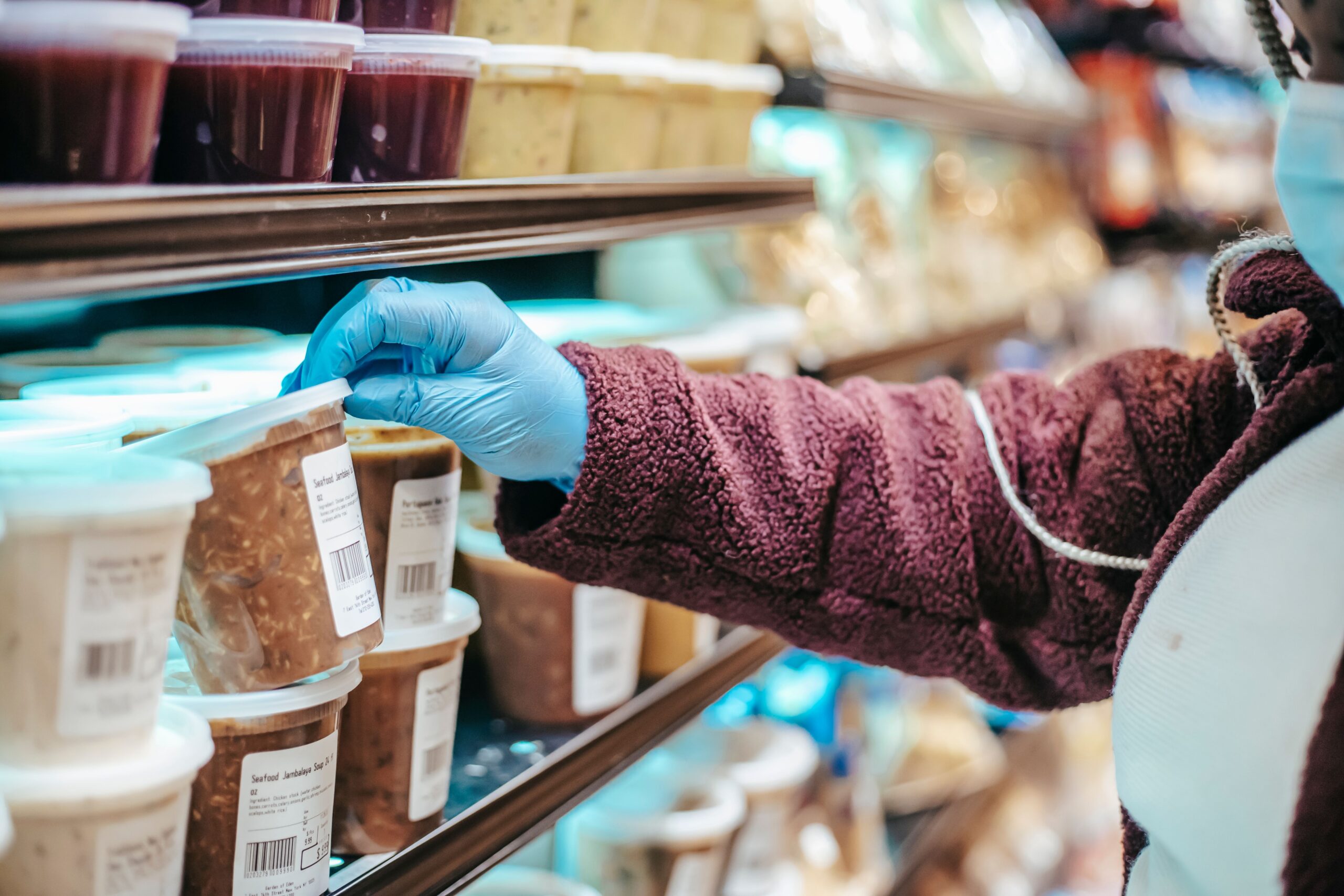
Employees often need to capture information in receiving areas, production rooms, warehouses, cold-storage facilities, and shipping departments.
Paper records and shared workstations can make it difficult to record transactions immediately, particularly when employees are handling materials or moving between locations.
Industrial mobile computers with barcode scanning capabilities can allow workers to capture identifiers and enter information where the activity takes place.
Depending on the software and application, employees may be able to:
- Receive ingredients and capture lot numbers.
- Confirm product identity before production.
- Record material movements.
- Associate ingredients with production batches.
- Check inventory and storage locations.
- Verify finished-product identifiers.
- Record shipments and transfers.
The goal is to make accurate data capture part of the normal workflow rather than a separate administrative task performed later.
Mobile computing is especially useful when the system is designed around how employees actually work, with clear screens, appropriate validation, and minimal unnecessary data entry.
IBC supplies barcode and mobile computing technologies that can support these workflows.
Explore IBC’s barcode and mobile data collection solutions.
Is Your Traceability System Ready for a Recall?
Food businesses should not wait until a customer complaint or supplier notification to discover that their traceability records are incomplete.
Consider reviewing your current system if:
- Ingredient lot information is recorded manually.
- Employees frequently re-enter the same information.
- Production records are spread across multiple systems or spreadsheets.
- It is difficult to connect ingredient lots to finished products.
- Inventory locations are not consistently updated.
- You cannot easily identify which customers received a particular lot.
- Product holds depend heavily on manual communication.
- Mock recalls reveal missing records or slow retrieval times.
These warning signs do not automatically mean your operation is non-compliant. They indicate areas where a more structured process or better data collection may be beneficial.
A review can help identify whether the next step should be improved procedures, better label control, barcode scanning, software integration, or a broader traceability project.
Strengthen Your Food Traceability with IBC
Effective food safety starts with preventive controls, reliable procedures, and trained employees.
When a problem occurs, accurate traceability records can help businesses understand which products may be affected and where those products have gone.
IBC International Bar Coding Systems & Consulting helps food manufacturers, processors, and packers evaluate technologies for product identification, labeling, barcode scanning, mobile data collection, and traceability.
Depending on your operation, these technologies can help support more consistent ingredient receiving, production tracking, finished-goods identification, and shipping records.
Want to improve product traceability in your food operation?
Explore IBC’s Traceability Solutions or Barcode and Data Collection Solutions.
Contact IBC to discuss how barcode technology and integrated data collection could support your food safety and traceability objectives.
Important: Technology is one component of a food safety program. Businesses should confirm their specific regulatory obligations with the relevant food safety authorities and qualified food safety professionals.