
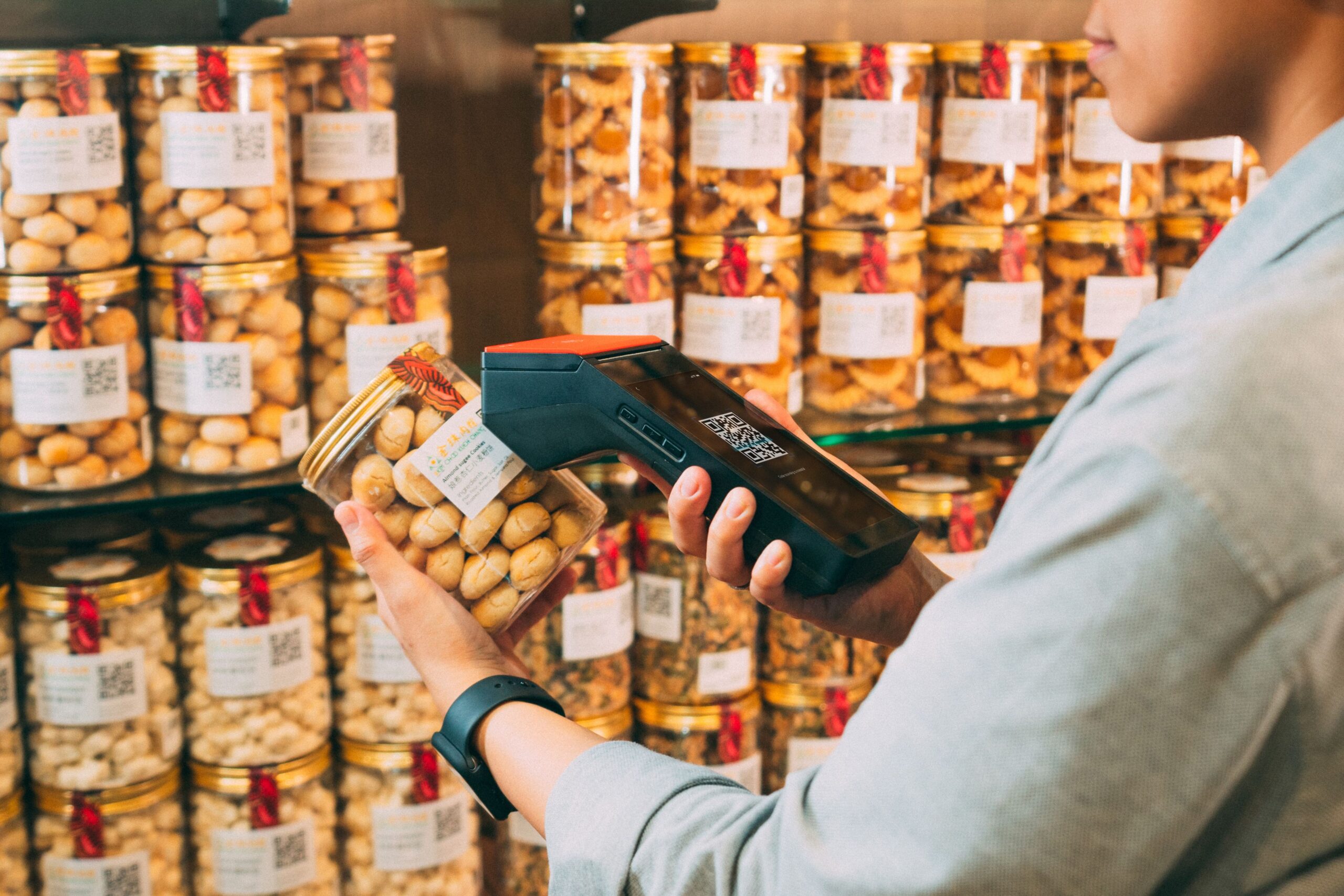
Could Poor Barcode Quality Be Costing Your Business? The Importance of Barcode Verification
A barcode that looks perfectly fine on a label may not scan reliably at the checkout, in the warehouse, or on the production floor. For manufacturers, food processors, packaging operations, and distribution businesses, that small problem can lead to shipping delays, rejected products, costly rework, and unnecessary labour.
As supply chains become more connected and customers demand greater accuracy, barcode quality has become an important part of operational efficiency. A barcode is more than a printed pattern of lines or squares. It is a key link between a physical product and the digital information used to identify, track, receive, store, and ship it.
When that link fails, the consequences can extend well beyond a single unsuccessful scan.
Barcode verification helps businesses identify potential problems before products leave the facility, helping protect product identification, traceability, and customer relationships.
Why Barcode Quality Matters More Than You Think
Barcodes are used throughout manufacturing and distribution to connect products with important information, including product numbers, lot codes, production dates, shipping details, and inventory records.
For these systems to work effectively, barcodes must be printed clearly and meet the applicable quality requirements.
Unfortunately, barcode problems can be difficult to spot with the naked eye. A barcode may look sharp and readable to a person but still perform poorly when scanned by a barcode reader. Conversely, a barcode that appears less than perfect may still scan under certain conditions. Visual inspection alone is not a dependable way to assess barcode quality.
Several factors can affect barcode readability:
- Poor print quality: Printheads that are worn, dirty, or improperly maintained can create incomplete or inconsistent bars and spaces.
- Incorrect printer settings: Print speed, darkness, resolution, and other settings can affect the quality of the finished barcode.
- Unsuitable label materials: Some label materials, coatings, or finishes may interfere with print quality or scanning performance.
- Improper barcode dimensions: Barcodes printed too small, stretched, compressed, or otherwise incorrectly sized may not meet the requirements of the intended application.
- Insufficient contrast: The difference between the dark elements and the background can affect how reliably a barcode is read.
- Damaged labels: Scratches, wrinkles, smudges, moisture, abrasion, and other environmental factors can make a barcode difficult to scan.
- Incorrect barcode data: Even a barcode that scans successfully can create problems if it contains the wrong product identifier or information.
These issues can occur during label design, printing, application, packaging, storage, or transportation.
Without a consistent quality-control process, barcode problems may go unnoticed until a customer, retailer, shipping partner, or receiving department discovers them.
The Hidden Costs of Barcode Errors
A barcode that fails to scan can create much more work than simply trying again.
In a busy production or distribution environment, employees may need to stop what they are doing, manually enter product information, print a replacement label, or investigate why a system cannot recognize an item. When this happens repeatedly, the costs can accumulate quickly.
1. Retailer Chargebacks and Rejected Shipments
Retailers and large supply-chain partners often establish specific requirements for product identification, barcode quality, labeling, and shipping documentation.
If a product’s barcode does not meet the applicable requirements, a shipment may encounter receiving problems, delays, additional handling, or financial penalties under the customer’s compliance policies.
For manufacturers supplying multiple retailers, even a small number of recurring labeling issues can create unnecessary administrative work and strain customer relationships.
Barcode verification provides a way to assess barcode quality before products are shipped. Identifying problems earlier can help businesses reduce avoidable compliance issues and improve confidence in their labeling processes.
Of course, verification does not guarantee that a retailer will accept a shipment. Businesses must also confirm that the barcode contains the correct data and that the overall label meets the customer’s requirements.
2. Production Delays and Rework
Manufacturing lines depend on predictable, repeatable processes. When a barcode cannot be read by downstream equipment, production may need to slow down or stop while employees investigate the problem.
Depending on the application, a barcode failure can affect product identification, packaging verification, case tracking, pallet identification, or the transfer of production information between systems.
Employees may need to remove a product from the line, replace a label, reprint packaging, or manually correct information in a production system.
These interruptions can reduce throughput and divert staff from higher-value work.
The best time to identify a barcode-quality problem is before it affects hundreds or thousands of products. Establishing appropriate quality checks at the printing stage can help businesses detect recurring issues earlier and reduce the risk of large-scale rework.
3. Inventory and Shipping Errors
Barcode scanning is commonly used to confirm product movements throughout warehouses and distribution centres.
When a barcode fails to scan, workers may have to enter information manually or use an alternative process to complete a transaction. Manual workarounds can increase processing time and introduce opportunities for data-entry errors.
If the barcode contains incorrect information, rather than simply poor print quality, the consequences may be more serious. A product could be associated with the wrong identifier, creating discrepancies between the physical item and the information stored in the inventory or shipping system.
Reliable barcode operations therefore depend on two related but distinct factors: the barcode must contain the correct information, and it must be printed to a quality level appropriate for its intended use.
Verification helps assess the second factor. Data validation and process controls are also needed to confirm the first.
4. Traceability Gaps
For many businesses, barcode scanning plays an important role in tracking products from production through storage, distribution, and delivery.
Manufacturers may use barcodes to associate products with production batches, lot numbers, expiry dates, or other information needed to support traceability.
When a barcode cannot be read, employees may have difficulty recording a transaction or connecting a product with the correct digital record. Depending on the system and the available backup procedures, this can create incomplete records or require time-consuming investigation.
In industries where traceability is particularly important, these gaps can affect operational visibility and make it harder to retrieve accurate information when it is needed.
Barcode verification is one component of a stronger traceability process. It helps businesses assess barcode print quality, while integrated scanning systems, appropriate software, and sound data-management procedures help ensure that product movements are captured correctly.
5. Increased Labour Costs
Repeated barcode failures consume employee time.
Workers may have to retry scans, clean or reposition labels, enter information manually, contact supervisors, reprint labels, or investigate recurring problems. Supervisors and technical staff may also be called away from their regular responsibilities to resolve issues that could have been prevented.
One failed scan may seem insignificant. However, when the same problem affects multiple products, shifts, production lines, or facilities, the cumulative impact can become substantial.
Improving barcode quality can help reduce avoidable troubleshooting and allow employees to focus on production, quality control, order fulfilment, and other important tasks.
What Is Barcode Verification?
Barcode verification is a process used to assess the quality of a printed barcode against applicable technical standards.
Unlike a conventional barcode scanner, which is designed primarily to read encoded information, a barcode verifier evaluates specific characteristics of the barcode to determine whether it meets the relevant quality requirements.
Depending on the barcode type, application, and applicable standard, verification can assess characteristics such as:
- Symbol contrast and reflectance.
- Bar and space quality.
- Modulation and other measures of consistency.
- Decodability, or how well the barcode’s structure can be interpreted.
- Defects and irregularities in the printed symbol.
- Overall symbol quality according to the applicable grading system.
The results can help identify whether a barcode meets the required quality level and reveal potential problems with the printing process.
This is important because a barcode that scans successfully on one device does not necessarily meet the quality requirements of its intended application. Different scanners have different capabilities, and a barcode may be readable under favourable conditions but unreliable in other environments.
Verification provides a more objective assessment than simply checking whether a barcode can be scanned.
It is particularly valuable when businesses need to demonstrate that their barcodes meet customer specifications or applicable standards.
Barcode Scanning vs. Barcode Verification: What’s the Difference?
Although the two technologies are related, they serve different purposes.
Barcode scanning reads the information encoded in a barcode. It is used to identify products, receive inventory, confirm shipments, record production activity, and update business systems.
Barcode verification assesses the quality of the printed barcode against defined requirements. It helps determine whether the symbol has been produced to an appropriate standard for its intended use.
Consider a manufacturer printing thousands of product labels each day. A handheld scanner might successfully read a sample label, but that result alone does not establish that every label meets the applicable quality requirements.
A verification process can help the manufacturer evaluate print quality more objectively and identify problems that ordinary scanning may not reveal.
Both functions are important. Scanning enables daily operations, while verification helps support consistent barcode quality.
Why Barcode Verification Is Especially Important for GS1 Barcodes
Many businesses use GS1 standards to identify products and share information across supply chains. These standards support consistent product identification and the use of barcodes in retail, logistics, healthcare, and other industries.
For companies supplying major retailers or operating across multiple distribution channels, barcode requirements may extend beyond simply being able to scan a product at the point of use.
The applicable requirements can depend on the barcode symbology, the application, the customer, and the industry.
For example, a barcode used on a consumer product may have different application requirements from a barcode used on a shipping case or logistics label. Businesses should confirm which standards and specifications apply to each use case rather than assuming that one approach will work for every label.
A barcode verification service can help assess whether a barcode meets the relevant quality criteria and identify potential issues before products enter the supply chain.
For manufacturers preparing for changing retail and product-identification requirements, understanding barcode quality now can also help reduce last-minute corrections and unnecessary disruption later.
How Barcode Verification Helps Prevent Problems Before They Start
An effective barcode quality process begins before a label reaches a finished product.
Rather than waiting for a customer to report a scanning problem, businesses can incorporate barcode quality checks into their existing label design, printing, and quality-control workflows.
Here are five practical ways to improve the process.
1. Verify Barcodes Before Full Production
When introducing a new label design, product, printer, or label material, verify sample barcodes before committing to a full production run.
This can help identify problems with barcode dimensions, print quality, contrast, or other characteristics while changes are still relatively easy to make.
It is generally more efficient to correct a label design or printer setting before thousands of labels have been printed than to discover the problem after products have been packaged.
2. Check Print Quality When Making Changes
Barcode quality can change when businesses adjust printer settings, replace printheads, change label stock, or modify the production process.
Establishing appropriate verification checks following significant changes can help identify quality issues before they become widespread.
The frequency of verification should reflect the application, customer requirements, risk level, and production environment.
3. Maintain Industrial Printers
Printers play a critical role in producing consistent, readable barcodes.
Routine maintenance, appropriate printer settings, quality consumables, and timely replacement of worn components can help reduce print-related problems.
Businesses should also ensure that employees understand how to recognize common printing defects and when to escalate an issue.
4. Standardize Label Design and Printing
Where practical, standardizing label templates, barcode dimensions, print settings, and approved materials can reduce variation between production runs.
Label design software and centrally managed templates can help control how product information is formatted and printed.
For businesses operating multiple production lines or facilities, consistent processes are particularly valuable because they reduce the risk of each location developing different approaches to the same labeling requirement.
5. Investigate Recurring Failures
When a barcode fails verification, replacing the label may solve the immediate problem, but it does not necessarily address the cause.
Businesses should investigate whether the issue originates from the label design, printer condition, print settings, consumables, application process, or another part of the workflow.
Documenting recurring issues can help identify patterns and support corrective action.
The goal is not simply to produce one good barcode. It is to establish a process that consistently produces barcodes suitable for their intended application.
Do You Need to Buy Barcode Verification Equipment?
Not necessarily.
Dedicated barcode verification equipment can be valuable for organizations that regularly produce large volumes of labels or need to perform verification in-house. However, purchasing equipment is not the right solution for every business.
A verifier represents an investment not only in equipment, but also in training, ongoing maintenance, procedures, and the time required to carry out and document checks.
For businesses that need barcode verification occasionally, purchasing specialized equipment may be difficult to justify.
An external verification service offers another option.
Instead of investing in dedicated equipment, businesses can submit barcode samples for professional assessment. This can be particularly useful when introducing new products, preparing labels for a customer, reviewing a barcode-related issue, or confirming that a label meets a particular requirement.
The most suitable approach depends on production volume, the frequency of verification, internal expertise, customer expectations, and the consequences of a barcode-quality failure.
The important point is that businesses do not necessarily need to purchase verification equipment to take barcode quality seriously.
Barcode Verification Services from IBC
At IBC International Bar Coding Systems & Consulting, we help businesses address barcode quality requirements through our Bar Code Verification Service.
The service provides a way to have barcodes professionally assessed without purchasing dedicated verification equipment. It can help businesses evaluate barcode quality, identify potential issues, and better understand whether their labels meet the relevant requirements.
This is particularly valuable for companies that want greater confidence in their product identification processes but do not require an in-house verification system for everyday use.
Barcode verification can be useful when:
- Launching a new product or label design.
- Preparing product labels for retail distribution.
- Reviewing barcode-related customer complaints.
- Investigating recurring scanning failures.
- Changing printers, label materials, or printing processes.
- Checking barcode quality against applicable standards.
- Seeking to reduce the risk of costly labeling errors.
IBC can help businesses identify potential barcode-quality issues before they create larger problems downstream.
For organizations with broader labeling challenges, verification may also be part of a larger improvement initiative involving industrial barcode printers, barcode scanners, label design software, or automated print-and-apply systems.
The objective is to help ensure that product identification processes are dependable, practical, and suited to the demands of the operation.
How Barcode Verification Fits into a Larger Automation Strategy
Barcode verification is most effective when considered as part of the overall product-identification process.
For example, a manufacturer may use label design software to create a label, an industrial printer to produce it, a print-and-apply system to attach it to a product or package, and barcode scanners to capture the information at different stages of production and distribution.
Each component has a specific role.
- Label design software helps control the information and layout printed on labels.
- Industrial barcode printers produce the physical labels.
- Print-and-apply systems automate label application in suitable production environments.
- Barcode scanners read barcode information and pass it to connected systems.
- Barcode verification assesses the quality of the printed barcode against the applicable requirements.
When these elements work together, businesses can create a more consistent approach to product identification.
However, automation alone does not guarantee quality. An automated system can reproduce the same problem across a large number of products if the underlying label design, printer settings, or process is incorrect.
That is why quality checks matter.
By identifying problems early and maintaining appropriate controls, businesses can reduce avoidable rework, improve confidence in their labeling, and support more reliable production and distribution processes.
What Is the Return on Investment of Barcode Verification?
The financial value of barcode verification depends on the business, the products involved, the frequency of labeling errors, and the cost of resolving those errors.
A useful starting point is to calculate how much time and money the organization currently spends dealing with barcode-related problems.
Consider the following costs:
- Employee time spent investigating failed scans.
- Labour required to replace or reprint labels.
- Products held while labeling problems are corrected.
- Additional handling or rework.
- Delays in shipping and receiving.
- Potential customer penalties or chargebacks.
- Administrative time spent responding to customer complaints.
- Costs associated with investigating traceability or identification discrepancies.
Not every barcode issue creates all these costs, and some problems may have little financial impact. The important step is to understand which costs are relevant to your operation.
A Simple Example
Imagine a manufacturer experiences 20 barcode-related incidents per month. Each incident requires an average of 15 minutes of employee time to investigate and resolve.
That represents five hours of labour each month, or 60 hours annually, before accounting for any additional production delays, replacement labels, shipping issues, or customer penalties.
If verification and process improvements prevent some of those incidents, the business may recover a portion of that time.
This is an illustrative example, not a guaranteed outcome. Actual savings will depend on the number and nature of barcode failures, the effectiveness of corrective measures, and the cost of the verification process.
The broader lesson is straightforward: understanding the cost of barcode problems makes it easier to evaluate the potential value of preventing them.
For businesses experiencing recurring labeling issues, professional barcode verification can be a practical first step toward making informed improvements.
Is It Time to Review Your Barcode Quality Process?
Barcode quality is easy to overlook when products are moving through production and orders are shipping on schedule. But recurring scanning problems, customer complaints, manual workarounds, and unexpected relabeling can indicate that the process deserves a closer look.
Consider reviewing your current approach if:
- Customers or distribution partners have reported barcode-reading problems.
- Employees frequently enter product information manually because a barcode will not scan.
- Your business has introduced new products, packaging, or label designs.
- You have changed printers, label materials, or production processes.
- You supply customers with specific barcode-quality requirements.
- You want to improve confidence in your labeling and traceability processes.
A review does not necessarily require a major automation project or an investment in new equipment.
In some cases, the best starting point is to verify a sample barcode, identify the underlying issue, and make targeted improvements to the existing process.
By addressing barcode quality proactively, businesses can reduce avoidable disruption and build a stronger foundation for reliable product identification.
Protect Your Products with Better Barcode Quality
A barcode may be small, but its role in modern manufacturing, packaging, warehousing, and distribution is significant.
When barcodes are printed to the appropriate quality requirements and contain accurate information, they help support reliable identification and efficient data capture. When they fail, businesses may face delays, rework, additional labour, and unnecessary complications throughout the supply chain.
Barcode verification offers a practical way to assess print quality and identify potential issues before they become larger problems.
You do not have to wait for a failed shipment, a customer complaint, or a production interruption to find out whether your barcodes meet the requirements of your application.
IBC International Bar Coding Systems & Consulting can help you take a proactive approach to barcode quality.
Want to know whether your barcodes meet the required standards?
Learn more about IBC’s Bar Code Verification Service and discover how professional barcode verification can help you identify potential labeling problems before they affect your operation.